
L-Citrulline and Citrulline Malate: What Your Label Really Gives You
Label Math
L-Citrulline vs. Citrulline Malate: What Is the Difference?
L-citrulline and citrulline malate both supply citrulline, but the grams on a label are not equal. L-citrulline is the amino acid itself, so 6g is 6g. Citrulline malate adds malate, so 6g at a 2:1 ratio gives about 4g of citrulline. Check the form and ratio before you compare tubs.
Published Jul 20, 2026 · Updated Nov 9, 2026
L-citrulline is the amino acid on its own. When a label lists 6g of L-citrulline, the scoop holds 6g of citrulline. Citrulline malate is citrulline combined with malate, a compound your body also uses in energy metabolism, so its listed weight covers both parts. On paper, that's the whole citrulline vs citrulline malate difference: one number is all citrulline, the other is a combined total.
Malate isn't an inactive filler, and it doesn't make citrulline malate better or worse for your training. Composition and performance are separate questions. This article covers both, starting with the one you can check yourself: how much citrulline is actually in the scoop.
What Does 2:1 Citrulline Malate Mean?
A 2:1 ratio means two parts citrulline to one part malate by weight. To find the citrulline, divide the citrulline part by the total number of parts, then multiply by the listed weight. At 2:1, citrulline is two-thirds of the number on the label. At 1:1, it's half.
| Listed Ingredient | Listed Weight | Citrulline |
|---|---|---|
| Pure L-citrulline | 6g | 6g |
| Citrulline malate, stated 2:1 | 6g | About 4g |
| Citrulline malate, stated 1:1 | 6g | About 3g |
| Citrulline malate, stated 2:1 | 8g | About 5.3g |
| Citrulline malate, stated 1:1 | 8g | About 4g |
| Citrulline malate, ratio not stated | 6g | Cannot be calculated from weight alone |
The table has two limits. A stated ratio describes what a product is supposed to contain, not verified purity. And when citrulline sits inside a proprietary blend under one combined weight, there's no individual citrulline dose to calculate in the first place.
L-Citrulline and Citrulline Malate: How to Check Your Own Label
This check works on any tub, including the one already in your cabinet. All you need is the Supplement Facts panel.
- Find the form. Read the citrulline line exactly as written. "L-citrulline" means the amino acid itself. "Citrulline malate" means citrulline combined with malate.
- Find the ratio. Citrulline malate is often listed with a ratio such as 2:1 or 1:1 next to the name. Some labels don't give one.
- Do the math. Multiply the listed grams by two-thirds for 2:1 or by one-half for 1:1. Pure L-citrulline needs no math.
- Stop where the label stops. With no ratio, the citrulline amount can't be calculated from weight alone, so ask the manufacturer. If citrulline is part of a proprietary blend, the label doesn't give you a citrulline dose to compare.
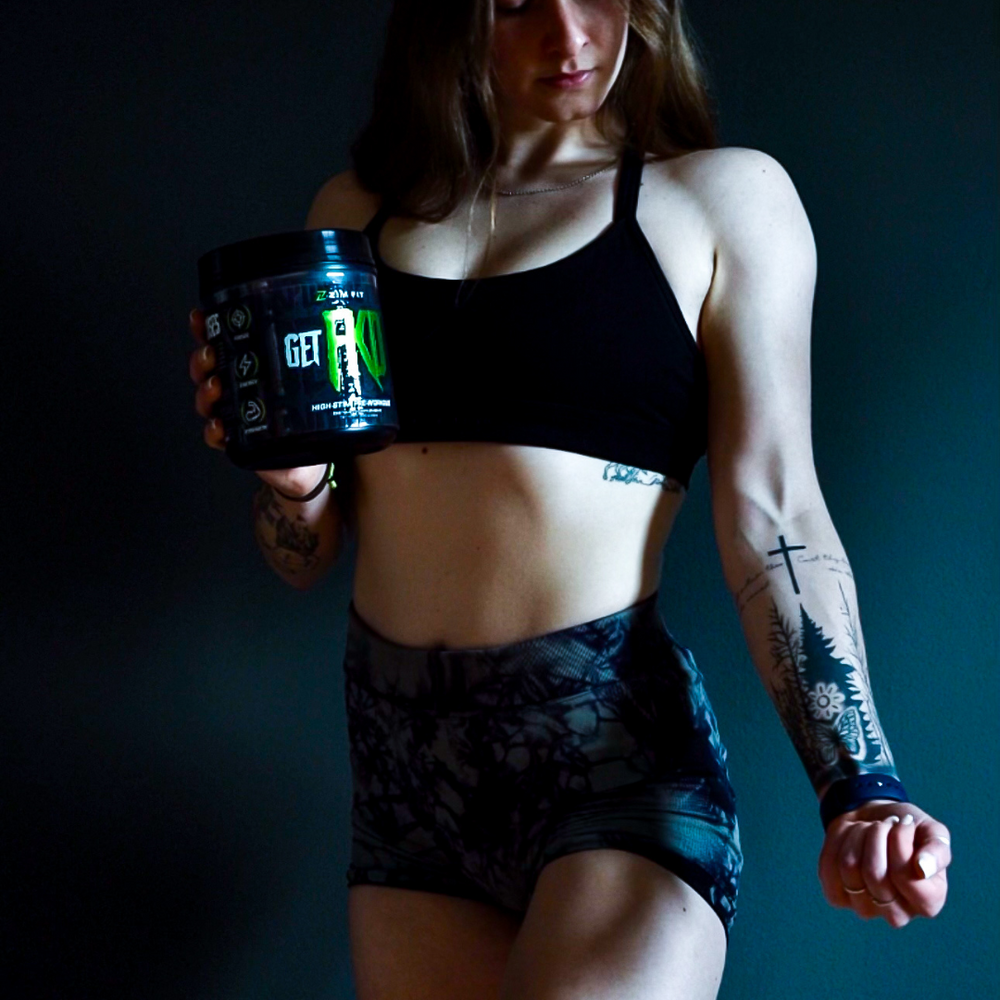
Here's the same check on our own labels. GET PMPD and GET FKD both list L-citrulline itself on the citrulline line, so there's no ratio to work out.
| Product | Label Line | Form | Citrulline |
|---|---|---|---|
| GET PMPD | L-Citrulline 7,000mg | L-citrulline | 7g |
| GET FKD | L-Citrulline 6,000mg | L-citrulline | 6g |
You can read the full panel for the worked example on the GET PMPD low-stim pre-workout page, where every ingredient amount is listed. The GET FKD high-stim pre-workout page does the same for the higher-caffeine formula. Choose between them on caffeine and the whole formula, not on the bigger citrulline number alone.
Do Labels Match the Stated Ratio?
Most of the time, you take the ratio on trust. One study shows why that matters. In a 2018 citrulline malate trial, researchers used NMR analysis to test five commercially sold citrulline malate powders labeled 2:1. The measured ratios were 1.92, 1.62, 1.57, 1.51 and 1.11 to 1. The 1.11:1 powder was the supplement used in the trial itself: 4.21g of citrulline per 8g, against about 5.33g at a true 2:1.
That's five powders, not the whole market, and it doesn't mean every product is off. A 2021 critical review of citrulline malate also pointed to quality-control issues with manufacturers' stated ratios. The takeaway is simple: the ratio on a label is a claim, not a measurement. With pure L-citrulline, there's no ratio to take on trust, because the listed number is the citrulline number.
Does Citrulline Malate Work Better Than L-Citrulline?
No winner has been shown. The research on citrulline in general is mixed, and the one head-to-head trial found that neither form beat placebo.
| Research | Form and Dose | What It Found |
|---|---|---|
| 2021 meta-analysis, 8 studies, 137 participants | 6g to 8g citrulline malate, 40 to 60 minutes before exercise | About 3 more repetitions to failure (about 6.4%), a small effect |
| 2020 meta-analysis, 13 studies | L-citrulline or citrulline malate, within 2 hours before exercise | Lower perceived exertion and less soreness at 24 hours; no significant change in blood lactate |
| 2022 meta-analysis, 4 studies | Citrulline malate in resistance-trained adults | No effect on muscle strength |
| 2023 trial, 18 resistance-trained adults | 8g L-citrulline, 1 hour before testing | No improvement in strength, muscle endurance or muscle oxygenation |
| Head-to-head trial, 43 trained adults | 5.3g L-citrulline vs. 5.3g L-citrulline plus 2.7g malate, 45 minutes before | Neither form improved performance compared with placebo |
| 2026 meta-analysis, 30 trials, 644 participants | Citrulline malate | A small improvement in overall performance, with low to very low certainty |
Taken together, citrulline may help some training outcomes, but the response depends on the protocol and the results aren't consistent. The NIH Office of Dietary Supplements exercise review describes the citrulline performance research as a few trials with conflicting results. No study has shown that the pump itself differs between the two forms.
These studies measured performance, not muscle growth, so they don't show whether citrulline makes muscles bigger. They're also studies of the ingredient, not trials of GET PMPD or GET FKD. To line up the tub you already own against another one, compare your pre-workout with our label comparison tool.
L-Arginine vs. L-Citrulline
L-citrulline is a non-essential amino acid found naturally in watermelon. After you take it, your kidneys convert it into L-arginine, which your body uses to make nitric oxide, the molecule that helps blood vessels relax and widen.
Taking arginine directly looks like the shortcut, but a large share of oral arginine is broken down in the gut and liver before it reaches circulation. Citrulline largely avoids that first-pass breakdown, so it raises blood arginine more effectively than arginine itself. The 2018 L-citrulline review in Nutrients lays out that difference.
That's why citrulline shows up in pre-workout formulas. It doesn't mean every milligram becomes nitric oxide, and a pathway on paper isn't a guaranteed pump or strength gain.
L-Citrulline in Pre-Workout: What to Look for on a Label
There isn't one universal citrulline cutoff. A number only means something next to its form and the outcome being studied. The 2020 review discussed 3g to 4g of L-citrulline or 8g of citrulline malate about an hour before exercise. The 2021 repetitions analysis used 6g to 8g of citrulline malate 40 to 60 minutes before. Neither sets a minimum every pre-workout has to hit.
A label with 3g or 4g of L-citrulline isn't automatically "half-dosed," and a bigger number doesn't guarantee a better session. What you want is an exact amount and a named form. A proprietary blend defeats the comparison, because one blend total can't tell you how much of it is citrulline.
Citrulline is one line on the panel. For two others, read our AstraGin® explainer and our guide to glycerol in pre-workout. If the real decision is how much caffeine you want, the high-stim vs. low-stim guide covers it.
Safety and Who Should Ask First
If you take blood-pressure medication or anything else that affects your blood vessels, or you have a medical condition, ask a doctor or pharmacist before taking a concentrated citrulline supplement. Citrulline feeds the same pathway that helps blood vessels relax, so that conversation belongs before your first scoop.
Bring the whole label, not just the citrulline line. A pre-workout also contains caffeine and other ingredients, and the warnings and daily limit on the tub apply to all of them.
Frequently Asked Questions
Is L-citrulline malate the same as L-citrulline?
No. L-citrulline malate is L-citrulline combined with malate, so its listed weight includes both. L-citrulline on its own is just the amino acid. At a stated 2:1 ratio, 6g of citrulline malate supplies about 4g of citrulline.
What does 2:1 citrulline malate mean?
Two parts citrulline to one part malate by weight. Two-thirds of the listed weight is citrulline, so 6g gives about 4g and 8g gives about 5.3g. The ratio is what the label states, not a lab measurement.
How much L-citrulline is in 6g of citrulline malate?
About 4g at a stated 2:1 ratio and about 3g at 1:1. If the label gives no ratio and no separate citrulline amount, it can't be calculated from weight alone. Ask the manufacturer rather than guessing.
Is L-citrulline better than citrulline malate?
Not automatically. L-citrulline is easier to read, because the listed number is all citrulline. That doesn't prove better performance: in the head-to-head trial, neither form improved performance over placebo, and no study has shown one form beats the other.
Can you take citrulline and citrulline malate together?
If two products use different forms, add the citrulline from each: the full listed amount for L-citrulline, plus the ratio math for citrulline malate. Follow each product's directions and limits. This is label math, not a recommendation to combine them.
Is it worth taking citrulline malate?
The effect is small at best. The 2021 and 2026 meta-analyses found small improvements, the 2026 one with low to very low certainty, and the head-to-head trial found no benefit from either form. If you take it, know exactly how much citrulline you're getting.
Why use L-citrulline instead of L-arginine?
Oral arginine is heavily broken down in the gut and liver. Citrulline largely avoids that, and your kidneys convert it into arginine, so it raises blood arginine more effectively. That's a mechanism, not a guaranteed pump or performance result.
Is 4g of L-citrulline too little in a pre-workout?
Not automatically. Research has used different forms and doses for different outcomes, and the 2020 review discussed 3g to 4g of L-citrulline. No single amount guarantees a benefit. Look for an exact, disclosed dose and follow the product's directions.
When should I take citrulline before training?
Many acute studies gave citrulline about 40 to 60 minutes before testing. That describes research protocols, not your product's directions. Follow the current label on your tub, including serving limits and warnings, and don't raise a multi-ingredient dose to match a study.
Who should ask a doctor before taking citrulline?
Anyone on blood-pressure or other vascular medication, and anyone with a medical condition, should ask a doctor or pharmacist before taking a concentrated citrulline supplement. Bring the full label so they can see everything in the scoop.
Sources
- Vårvik et al., 2021. Acute effect of citrulline malate on repetition performance during strength training: a systematic review and meta-analysis.
- Rhim et al., 2020. Effect of citrulline on post-exercise rating of perceived exertion, muscle soreness, and blood lactate levels.
- Aguiar and Casonatto, 2022. Effects of citrulline malate supplementation on muscle strength in resistance-trained adults.
- Gonzalez et al., 2023. Acute effect of L-citrulline supplementation on resistance exercise performance and muscle oxygenation.
- Martín-Olmedo et al. Malate or not? Acute effects of L-citrulline versus citrulline malate on neuromuscular performance.
- Wang et al., 2026. Effects of citrulline malate supplementation on exercise performance: a systematic review and three-level meta-analysis.
- Chappell et al., 2018. Citrulline malate supplementation does not improve German Volume Training performance or reduce muscle soreness.
- Gough et al., 2021. A critical review of citrulline malate supplementation and exercise performance.
- Allerton et al., 2018. L-citrulline supplementation: impact on cardiometabolic health.
- NIH Office of Dietary Supplements. Dietary supplements for exercise and athletic performance.


Leave a comment