
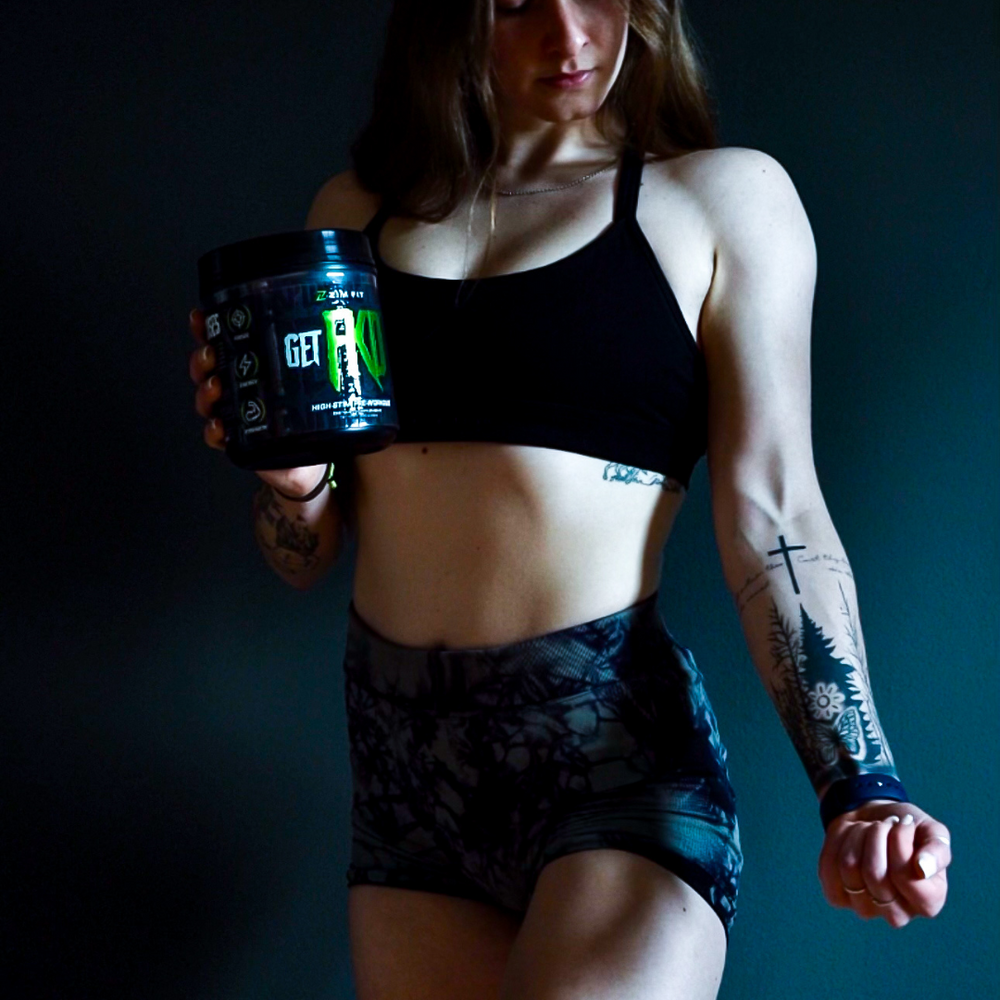
Why We Put Glycerol In 1 Of Our Pre-Workout Supplements
Label Math
What Is Glycerol in Pre-Workout?
Glycerol in pre-workout helps your body hold on to more of the water you drink. That fluid effect is well supported by research. Performance and pump claims are less settled. Glycerol powders are only part glycerol, so read the percentage: 3g of a 65% powder, as in GET PMPD, is about 1.95g of glycerol.
Glycerol, glycerin and glycerine are three names for one small molecule your body already uses every day. It dissolves easily in water and carries water with it, which is the whole reason it shows up on a pre-workout label.
On its own, glycerol is a thick, syrupy liquid. To get it into something you can scoop, manufacturers turn it into a glycerol powder, and only part of that powder's weight is glycerol. GlycerPump™ is a branded glycerol powder that is 65% glycerol by weight.
What Does Glycerol Do in Pre-Workout?
Glycerol works on fluid. After you take it, it spreads through the water in your blood and tissues and raises the concentration of those fluids for a while. Your kidneys respond by releasing less water, so more of what you drink stays in your body instead of leaving as urine. Researchers call this hyperhydration.
That effect is well documented. A 2007 meta-analysis found that glycerol taken with fluid kept more water in the body than the same fluid alone. A 2010 review in Sports Medicine reported that glycerol hyperhydration can add a liter or more of body water before exercise.
Whether that extra water makes you perform better is less settled. A 2009 review in Nutrition Reviews found some studies showing longer time to exhaustion and others showing no benefit, and concluded that the performance benefits “remain inconsistent.” Most of that research was done on endurance athletes, often in the heat, not on lifters training for a pump.
Does Glycerol Give You a Pump?
Glycerol gets sold as a pump ingredient, and sometimes as a vasodilator, something that widens blood vessels. That isn't where the evidence is. The research on glycerol is about body water, not blood vessels.
Plenty of lifters describe a fuller, tighter feel with glycerol, which fits with what it does with water. Strength-training research on that specific feeling is still thin, so treat it as something lifters report rather than a measured result. If blood flow is your question, that's L-citrulline, covered below.
Glycerol Powder: How Much Is in Your Pre-Workout?
Most of the classic glycerol research was built around endurance athletes pre-loading water before long, sweaty sessions. The Sports Medicine guidelines for that use land on 1.2g of glycerol per kilogram of body weight, taken with a large volume of fluid over about an hour. A 2012 study in the Journal of Human Kinetics used the same 1.2g per kg with water over 20 days in soccer players and sedentary men. It tested aerobic and anaerobic performance, not pumps, and its banned-substance note predates the 2018 rule change.
Put the numbers side by side and the scale difference is hard to miss:
- The research protocol: 1.2g per kg works out to about 90g of glycerol for a 75kg (165 lb) person.
- Liquid glycerol products: some list 20 to 25g of glycerol per serving.
- GET PMPD: 3g of GlycerPump™ at 65% is about 1.95g of glycerol per scoop.
Liquid products carry bigger numbers because they're aimed at the hyperhydration use the research studied. None of these figures is dosing advice. GET PMPD is a pre-workout with glycerol as one ingredient, not a hyperhydration product, and every amount in it is printed. That makes the label the place to start.
| Check | Why It Matters | On GET PMPD |
|---|---|---|
| The dose is listed | A glycerol dose hidden inside a blend total can't be checked. | 3g GlycerPump™, listed on its own line |
| The percentage | Glycerol powders are only part glycerol by weight. The percentage tells you the actual amount. | 65% glycerol (about 1.95g per scoop) |
| Sodium | Sodium also plays a role in how your body handles fluid, so it's worth seeing next to glycerol. | 220mg per serving |
| The water | Glycerol works with fluid, so how much water the directions call for matters. | 10 to 12 oz of cold water per full scoop |

Holding a different tub? Compare your pre-workout, or look up any ingredient in our supplement ingredient guide.
For timing, follow the directions on the tub. With GET PMPD, start with half a scoop in 6 to 8 oz of cold water 15 to 30 minutes before training to assess tolerance, then move to a full scoop in 10 to 12 oz once you know how you respond. Don't take more than one serving in 24 hours.
The Pump Was Never Coming From the Caffeine
Caffeine is a stimulant. It wakes you up, sharpens focus, and can make hard sets feel more doable. It isn't a pump ingredient. The ingredients tied to blood flow and fluid in a pre-workout are different ones, and you can have them at full dose without a big caffeine number on top.
GET PMPD low-stim pre-workout is built around that idea. Each scoop lists 85mg of caffeine with 7g of L-citrulline, 3g of GlycerPump™ and 220mg of sodium. It's its own formula, not a lighter version of GET FKD high-stim pre-workout.
| Per Serving | GET PMPD | GET FKD |
|---|---|---|
| Caffeine | 85mg caffeine anhydrous | 300mg caffeine anhydrous + 50mg Infinergy™ dicaffeine malate |
| L-Citrulline | 7g | 6g |
| GlycerPump™ (65% glycerol) | 3g | None |
| Sodium | 220mg | 50mg |
| Servings per tub | 25 | 30 |
L-citrulline is involved in the body's production of nitric oxide, part of how blood vessels relax and widen. The NIH review of exercise supplements describes the performance evidence for citrulline as limited and conflicting, so read 7g as what's in the scoop, not as a guaranteed result. Our L-citrulline guide covers why pure L-citrulline and citrulline malate don't count the same on a label.
★★★★★
“As mentioned in other reviews, you do feel like you’re getting a good amount of energy from the 85 mg of caffeine and the focus is delivered for sure. I am used to higher stim pres and wasn’t expecting to get that. The focus with this is real and I was happy with the pump. Would recommend. The grape flavor also really great.”
You can read more reviews from lifters who use it. If you're weighing the two formulas, our high-stim vs. low-stim guide walks through when each one fits, and our low-stim vs. stim-free breakdown explains why 85mg is lower caffeine, not caffeine-free. They're for different days, never the same session.
Glycerol Supplement Benefits, Limits, and Side Effects
The straight summary of glycerol supplement benefits: it helps your body hold more of the fluid you drink, which matters most when you're sweating a lot. Research on direct performance gains is mixed, and the fuller feel lifters describe hasn't been measured in strength training.
Side effects in the research were uncommon and showed up at the large doses used for hyperhydration: nausea, stomach discomfort, dizziness and headaches in a small number of people. Extra retained water also adds a little body weight. Glycerol doesn't replace drinking water.
Who should skip it, or ask a doctor first:
- Anyone who has been told to limit fluids
- People with a kidney, heart or blood pressure condition
- Weight-class athletes heading into a weigh-in, since retained water shows up on the scale
If any of those apply, talk to your doctor before using a glycerol supplement or any pre-workout.
Frequently Asked Questions
What does glycerol do in pre-workout?
It helps your body hold on to water. Glycerol raises the concentration of your body fluids for a while, so your kidneys release less and more of what you drink stays in. Research strongly supports that fluid effect. Studies on direct performance gains are mixed, and most were done with endurance athletes.
Does glycerol give you a pump?
Not in a way research has measured. Glycerol's documented effect is fluid retention, not widening blood vessels. Many lifters report a fuller feel with it, which fits what glycerol does with water, but strength-training studies on that feeling are thin.
Is glycerol a good pre-workout?
Glycerol is one ingredient, not a pre-workout on its own. Its fluid effect is well supported, while the performance and pump evidence is mixed. Judge any pre-workout with glycerol by its whole label.
Is glycerol the same as glycerin?
Yes. Glycerol, glycerin, and glycerine are names for the same molecule. In supplements it's usually sold as a glycerol powder, so check the percentage on the label to see how much actual glycerol is in each serving.
How much glycerol is in GET PMPD?
Each scoop lists 3g of GlycerPump™, a 65% glycerol powder. That works out to about 1.95g of glycerol per serving, alongside 7g of L-citrulline, 220mg of sodium, and 85mg of caffeine. Every dose is printed on the label.
Does GET FKD have glycerol?
No. GlycerPump™ is in GET PMPD only. GET FKD has 6g of L-citrulline and no glycerol.
Is glycerol banned in sports?
Not under current World Anti-Doping Agency rules. Glycerol was added to WADA's prohibited list as a masking agent in 2010 and was removed on January 1, 2018. If you're a tested athlete, check your own federation's current rules before using any pre-workout.
Is glycerol better than creatine?
They do different jobs. Glycerol works on fluid around a training session. Creatine works by building up in your muscles when you take it every day, rest days included, which is why we leave it out of our pre-workouts. Creatine belongs in your day, not your pre-workout.
What are the side effects of glycerol?
In research, side effects were uncommon and mostly tied to the large hyperhydration doses: nausea, stomach discomfort, dizziness and headaches in a small number of people. The extra water it holds also adds some body weight.
Who should not take glycerol?
Anyone told to limit fluids, people with a kidney, heart or blood pressure condition, and weight-class athletes near a weigh-in should skip it or check with their doctor first.
Sources
- Goulet et al., meta-analysis of glycerol-induced hyperhydration, International Journal of Sport Nutrition and Exercise Metabolism, 2007
- van Rosendal et al., guidelines for glycerol use in hyperhydration and rehydration, Sports Medicine, 2010
- van Rosendal et al., physiological and performance effects of glycerol hyperhydration and rehydration, Nutrition Reviews, 2009
- Patlar et al., glycerol supplements and aerobic and anaerobic performance, Journal of Human Kinetics, 2012
- NIH Office of Dietary Supplements, Dietary Supplements for Exercise and Athletic Performance
- USADA, 2018 Prohibited List: Summary of Major Changes


Leave a comment