
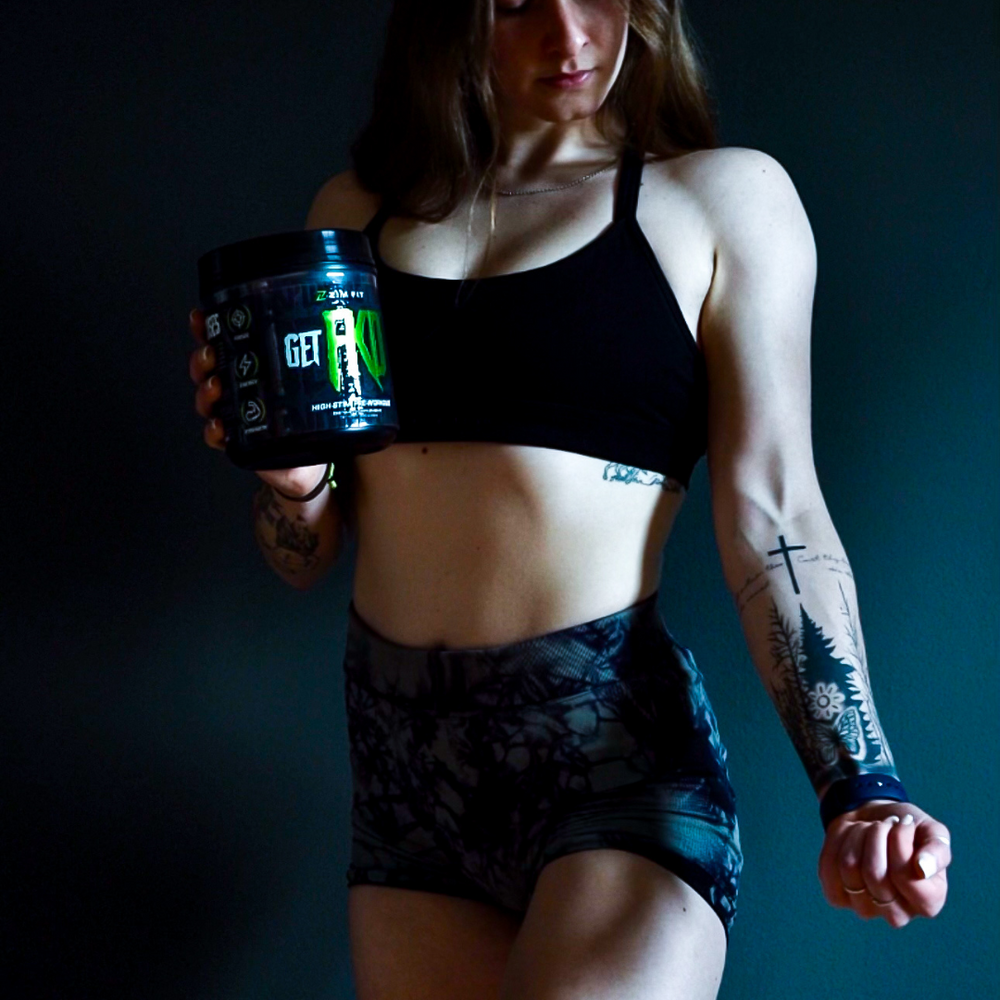
A Complete Creatine Guide From ZIM FIT
The Complete
Creatine
Guide
Everything you need to know about the most researched performance supplement on the planet — from science to serving size.
Creatine isn't a trend. It isn't hype. It's the most extensively researched supplement in sports nutrition history — with decades of peer-reviewed science backing its performance, recovery, and cognitive benefits. And yet, most people using it are only scratching the surface of what it can do.
This guide breaks down everything: the different forms of creatine, how to take it, the right dosages, why bumping your dose up matters, the cognitive edge it gives your brain, and where it actually shows up in whole foods. Let's get into it.
What Is Creatine?
Creatine is a naturally occurring compound synthesized in your liver, kidneys, and pancreas from three amino acids: arginine, glycine, and methionine. About 95% of the creatine in your body is stored in your skeletal muscle as phosphocreatine, with the remaining 5% distributed between the brain, liver, kidneys, and testes.
Its primary role is to rapidly regenerate adenosine triphosphate (ATP) — your body's primary energy currency. During high-intensity, explosive efforts (sprinting, heavy lifting, plyometrics), your body burns through ATP faster than it can produce it aerobically. Phosphocreatine donates a phosphate group to ADP, instantly recycling it back into usable ATP.
Bottom line: More creatine stored in your muscles = more fuel available during intense efforts = more reps, more power, faster recovery between sets. This is not speculation — it's textbook biochemistry.
The Different Types
The supplement industry has produced dozens of creatine variants over the years. Here's what actually matters — and what the evidence says.
Creatine Monohydrate
The OG. The most studied, most proven, most cost-effective form ever developed. Binds a single water molecule to creatine. Absorption is excellent, efficacy is undeniable. If you only ever take one form, this is it.
Creatine HCL
Creatine bound to hydrochloric acid. Significantly more soluble in water, which means better absorption at lower doses. Causes virtually zero bloating or GI discomfort — ideal for those sensitive to monohydrate.
Buffered Creatine (Kre-Alkalyn)
pH-buffered creatine designed to resist conversion to creatinine in the stomach. Marketed as more stable, requiring smaller doses. Research shows similar results to monohydrate at standard doses.
Creatine Ethyl Ester
Creatine attached to an ethyl ester to improve cell membrane permeability. Despite early buzz, most research shows it underperforms monohydrate in muscle saturation. Not the go-to choice.
Creatine Nitrate
Creatine paired with a nitrate group — providing both creatine's ATP benefits and nitric oxide production for better blood flow and pump. A solid dual-purpose option in pre-workout formulations.
Micronized Creatine
Standard creatine monohydrate processed into smaller particles. Identical biochemical effect — but mixes cleaner in water, dissolves fully, and causes less stomach discomfort for some users.
Magnesium Creatine Chelate
Creatine bound to magnesium to enhance ATP production efficiency. Magnesium plays a direct role in ATP synthesis, making this a theoretically powerful combo — though monohydrate remains the benchmark.
Tri-Creatine Malate
Three creatine molecules attached to malic acid. Malic acid is involved in the Krebs cycle (aerobic energy production), making this form theoretically beneficial for both explosive and endurance output.
ZIM FIT Take: For 95% of athletes, creatine monohydrate or creatine HCL will outperform everything else at a fraction of the cost. The fancy variants mostly solve problems that don't exist for most people.
Creatine & Cognitive Performance
Most people think creatine is only for muscles. That's a massive miss. Your brain is one of the most metabolically demanding organs in your body — and it runs on ATP, just like your muscles do.
The brain stores phosphocreatine and uses the same ATP-recycling pathway. When your brain is under demand — complex tasks, sleep deprivation, mental fatigue, high-stress situations — creatine supplementation can directly support cognitive output by maintaining ATP availability in neural tissue.
What the research shows:
- Improved working memory: Multiple trials show creatine supplementation improves short-term memory and working memory capacity, particularly in vegetarians and the sleep-deprived — populations with naturally low creatine stores.
- Reduced mental fatigue: Studies show measurable reduction in brain fatigue during sustained cognitive tasks, allowing for longer periods of focused mental work.
- Faster processing speed: Reaction time and processing speed show improvements under conditions of cognitive stress or sleep restriction.
- Neuroprotective effects: Emerging research suggests creatine may have neuroprotective properties, with potential applications in concussion recovery and neurodegenerative conditions like Parkinson's and Alzheimer's.
- Depression & mood: Preliminary clinical trials indicate creatine may support treatment-resistant depression, particularly in women, possibly through mechanisms involving brain energy metabolism.
- Sleep deprivation buffer: One of the most actionable findings — creatine meaningfully offsets the cognitive impairment caused by sleep loss. Miss a night? Your creatine stores could be the difference between sharp and foggy.
with creatine supplementation in research trials
Studies show higher dosing appears particularly beneficial for cognitive outcomes. While 3–5g/day adequately saturates muscle tissue, the brain may benefit from slightly higher doses — particularly during high-stress periods, intense study, or cognitive performance demands.
How to Take It
Loading Phase vs. Steady Dose
There are two primary approaches to building up your creatine stores:
| Protocol | Dose | Duration | Result |
|---|---|---|---|
| Loading Phase | 20–25g/day (split into 4–5 doses) | 5–7 days | Fully saturates muscle creatine stores rapidly. Faster results, higher short-term water retention. |
| Maintenance / Standard | 3–5g/day (single dose) | Ongoing | Gradually saturates stores over 3–4 weeks. Same endpoint, just slower. Less GI discomfort. |
| Higher Maintenance | 5–10g/day | Ongoing | Optimal for larger athletes (200+ lbs), maximizing both muscle and cognitive saturation. |
Best Delivery Methods
- Mixed in water: The simplest and most effective method. Use 8–16oz of water for full dissolution. Micronized versions mix cleanest.
- Mixed in juice: The carbohydrate and insulin spike from juice (especially grape or fruit juice) can enhance creatine uptake into muscle cells by driving glucose transporters. Classic post-workout protocol.
- In a protein shake: Works well — protein + creatine together supports recovery. The whey itself slightly elevates insulin, aiding transport.
- With food: Taking creatine alongside a meal containing carbohydrates and protein optimizes muscle uptake. The meal-stimulated insulin response drives creatine into muscle tissue efficiently.
- Capsules/tablets: Convenient but typically more expensive per gram and slower to dissolve. Effective, just less cost-efficient than raw powder.
Timing note: Creatine is not like caffeine — it doesn't need to be taken at a specific time to "work" that session. Its benefits come from having fully saturated stores. Consistency over weeks matters far more than whether you take it pre or post workout. That said, post-workout with a carb + protein source is the most evidence-supported window for maximizing uptake.
The Case for Higher Dosages
The standard 3–5g recommendation was largely built around the average 150-pound research subject. For bigger athletes, high-output training schedules, or those seeking cognitive benefits, that number deserves to be challenged.
Why bigger athletes need more:
Creatine is dosed relative to lean muscle mass. A 230-pound powerlifter has dramatically more skeletal muscle tissue to saturate than the average research participant. Studies using relative dosing (0.1g per kg of bodyweight) suggest larger athletes may need 7–10g daily to maintain full saturation.
Benefits of going above 5g:
- Greater muscle saturation: Once your stores are fully loaded, more creatine = more phosphocreatine available for high-intensity efforts. Larger athletes genuinely haven't saturated at 5g.
- Superior cognitive benefits: Research trials targeting brain health often use 8–20g/day. The blood-brain barrier limits creatine transport, so higher plasma concentrations help more creatine reach neural tissue.
- Better recovery under high training volume: During intense training blocks (multiple daily sessions, competition prep), elevated creatine intake speeds phosphocreatine resynthesis between efforts.
- Improved hydration and cell volumization: Creatine draws water into muscle cells, which improves intracellular hydration — a known signal for protein synthesis. Higher doses amplify this effect.
- Glycogen synthesis support: Research shows creatine loading enhances muscle glycogen storage alongside carbohydrate intake — particularly valuable for endurance athletes or anyone doing high-volume training.
Safety note: Creatine has been exhaustively tested at doses up to 30g/day with no adverse effects in healthy individuals. Long-term studies confirm it does not harm kidneys, liver, or hydration status in properly hydrated athletes. Drink your water — aim for at least 16oz extra per day when supplementing.
Creatine in Real Food
Creatine isn't just a lab-made powder — it's a naturally occurring compound found predominantly in animal muscle tissue. The average meat-eating person gets about 1–2 grams per day from diet alone. Here's how it breaks down across common foods:
There's an important caveat: cooking significantly degrades creatine. High heat converts creatine into creatinine (the waste product), so the numbers above represent raw food values. Your actual intake from cooked meat is notably lower — another reason supplementation is valuable even for heavy meat eaters.
Plant-based athletes receive virtually zero dietary creatine, making supplementation not optional but essential for maintaining performance and cognitive function. Research consistently shows vegetarians and vegans have significantly lower baseline muscle creatine stores — and correspondingly larger gains from supplementation.
The math: To hit 5g of creatine from diet alone, you'd need to eat roughly 1kg (2.2 lbs) of raw beef every single day. Supplementation isn't replacing whole food — it's making up for the gap between what food provides and what performance demands.
The Bottom Line
Creatine has earned its place as the cornerstone of any serious supplementation protocol — not because of marketing, but because decades of science and millions of athletes back it up. Here's what to take away:
- Creatine monohydrate remains the gold standard — proven, cheap, and effective. Creatine HCL is the cleaner alternative for those with GI sensitivity.
- Your brain benefits just as much as your muscles — especially under stress, sleep deprivation, or cognitive demand.
- 5g/day is a starting point, not a ceiling. If you're a bigger athlete or want cognitive benefits, 7–10g is a more appropriate target.
- Take it with carbs and protein for maximum uptake — post-workout with food is ideal.
- Consistency beats timing. Daily intake over weeks is what builds saturated stores. Don't stress the exact window.
- Dietary creatine from meat is real but insufficient for performance demands — especially once you factor in cooking losses.
- Creatine is one of the safest compounds ever studied. Hydrate properly and it will do nothing but help.
Don't Just Train. Train Smarter.
Stack your creatine with ZIM FIT's performance formulas and feel the difference on your next session.
Shop ZIM FIT USA


Leave a comment